
Executive coaching
Why External Coaching Helps Leaders See
More Clearly
- admin_ELEVATE
- June 25, 2026
- 5:33 am
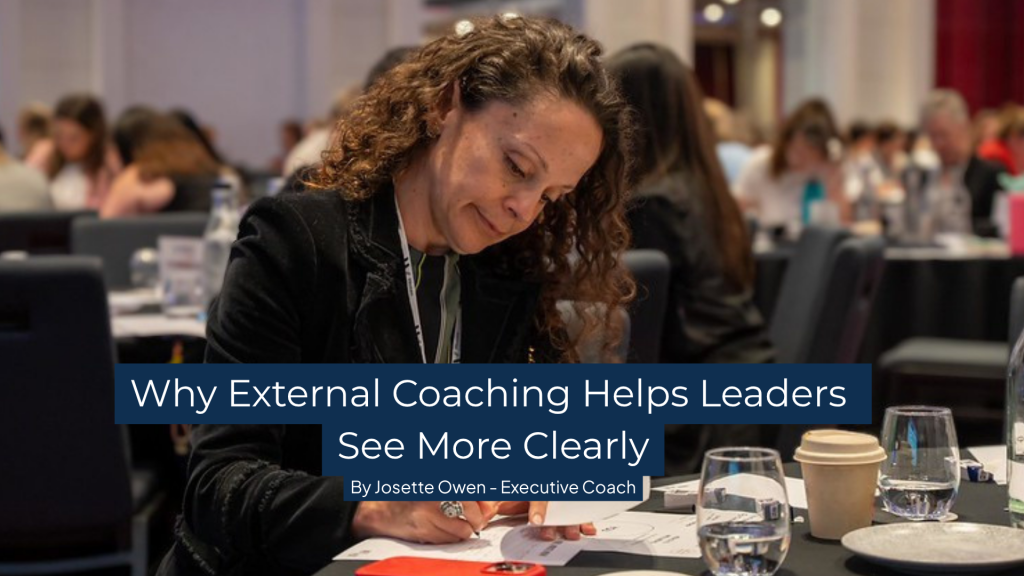
Leadership coaching, executive coaching and executive presence: why an external perspective matters
Leadership development is a priority for many organisations. Whether you’re an executive, senior leader, HR professional or People & Culture leader, the goal is often the same: helping leaders build confidence, strengthen executive presence, improve decision-making and lead high-performing teams.
One of the hardest things about leadership is that you’re trying to solve problems from inside the problem.
You’re in the conversations, carrying the pressure, navigating competing priorities and making decisions with incomplete information. You’re balancing the needs of your team, your stakeholders, your organisation and yourself, often all at the same time. When you’re that close to everything, it can be surprisingly difficult to step back and see clearly.
I think that’s one of the reasons external coaching can be so valuable.
Not because leaders aren’t capable, and certainly not because they need someone to tell them what to do. Most of the leaders I work with are highly capable people who care deeply about their work and their people. They’re committed to doing a great job and they’re usually working incredibly hard. What they often don’t have is the time or space to pause, reflect and work through what’s really going on beneath the surface.
When I’m coaching a leader, I’m not carrying the history of the organisation, navigating internal relationships or trying to manage competing agendas. That distance creates a different kind of conversation. It allows leaders to think out loud, test ideas, challenge assumptions and explore situations from angles they may not have considered before.
Often the most valuable thing I can do isn’t provide an answer. It’s ask a question.
Questions like:
- What’s really going on here?
- What might you not be seeing?
- What’s within your control?
- What story are you telling yourself about this situation?
- How is that story shaping the way you’re showing up?
I’ve always been fascinated by what happens when leaders have the opportunity to slow down and really think. So often, they arrive wanting to solve one problem and discover something much deeper underneath it. A leader might want to talk about a difficult team member and realise the real issue is a lack of clarity. Someone else might want help navigating a challenging conversation and discover they’re making assumptions that haven’t been tested. Another leader might tell me they need more confidence, only to realise that what they actually need is the courage to take the first step.
That’s what I love about coaching. Not because I get to solve the problem, but because I get to watch leaders see a situation differently. Sometimes it’s a small shift in perspective. Sometimes it’s recognising a pattern they’ve been repeating for years. Sometimes it’s simply having someone hold up a mirror and help them see what has been there all along.
In my experience, many leadership challenges aren’t really about strategy. They’re about how we show up while navigating the strategy. They’re about how we communicate when things feel uncertain, how we respond when we’re under pressure, how we build trust, how we influence others and how we lead ourselves before we lead anyone else.
That’s why self-awareness sits at the heart of so much of my work.
The stories we tell ourselves shape our behaviour. Our behaviour shapes our impact. If we’re not aware of what’s driving our thinking, it’s very easy to react rather than respond. It’s very easy to operate on assumptions rather than facts. It’s very easy to get caught in patterns that no longer serve us.
This is also where strengths-based coaching can be incredibly powerful.
One leader I worked with had a natural ability to understand people deeply. He’d built strong, high-performing teams throughout his career, but he wanted to strengthen his influence at a more senior executive level. It had been suggested to him that he needed to build his executive presence.
As we explored his strengths together, he began to realise that what made him successful with teams could also help him build stronger relationships with executives. Rather than trying to become someone different, he learned how to apply a strength he already had in a different context.
Over time, his confidence grew, his relationships strengthened, his influence increased and his executive presence lifted. Eventually, he stepped into a more senior role.
What I found most interesting wasn’t the outcome. It was the process. He already had the capability. He already had the strength. What changed was his awareness of how to use it more intentionally.
I see versions of that story all the time.
The breakthrough is rarely a new tool, a new model or a piece of advice that changes everything overnight. More often, it’s clarity. Clarity about what’s really happening, clarity about what’s most important, clarity about what sits within our control and clarity about how we want to show up.
When leaders have that clarity, they make better decisions. They communicate more effectively. They build stronger relationships. They create healthier and more motivated teams. The impact extends far beyond the individual leader.
External coaching doesn’t replace the important work that happens inside organisations through leaders, HR teams and People & Culture teams. Those people bring context, relationships and organisational knowledge that are incredibly valuable. What coaching brings is something different. It brings an objective perspective, a thinking partner and a space where leaders can step back from the noise long enough to hear their own thinking again.
Because sometimes the most useful question isn’t:
“What should I do next?”
It’s:
“What am I not seeing right now?”
Frequently Asked Questions
What is executive coaching?
Executive coaching is a confidential development process that helps leaders improve self-awareness, decision-making, communication, influence, executive presence and leadership effectiveness.
What is executive presence?
Executive presence is the ability to communicate with confidence, build trust, influence others and create confidence in your leadership, particularly during uncertainty and change.
Why use an external coach?
An external coach brings an independent perspective, objectivity and a safe space for leaders to reflect, challenge their thinking and work through complex leadership situations.
How does coaching help leadership development?
Leadership coaching supports leaders to strengthen self-awareness, build confidence, improve communication, navigate challenges more effectively and lead healthier, higher-performing teams.
Who benefits from leadership coaching?
Leadership coaching can benefit emerging leaders, senior leaders, executives, executive teams and high-potential employees who want to strengthen their leadership capability and impact.
Josette is a leadership coach working with leaders, executive teams and organisations across Australia and New Zealand. She specialises in leadership clarity, executive presence, strengths-based leadership and building healthy, motivated teams.